The 10× Growth Mindset: What even big apps get wrong, and how those gaps stall growth

Welcome to The 10× Growth Mindset Series. This series is our way of sitting down with people who genuinely understand growth not as a list of tactics, but as a system with patterns, blind spots, and behaviors that repeat across products. We look for operators who think clearly, learn fast, and know what actually shifts an app from “trying” to “scaling.”
Today’s guest is Kevser Imirogullari, Co-Founder of OtherWayAround. She has spent more than a decade across agencies and high-velocity app teams, working hands-on with ASO, paid acquisition, analytics, and product. Her perspective comes from real work across hundreds of apps, and she speaks with the kind of honesty that prompts you to rethink how your own system runs.
In this conversation, she shares the patterns she sees most often: what teams do when they truly grow, and what they do when they quietly stall.
Campaignswell: Before we dive into the growth topics, could you introduce yourself? What’s your background, and what would you call your “superpower”?
Kevser: Before I moved to London, I spent years working in digital agencies in Turkey, doing web marketing for e-commerce — Google Analytics, Facebook Ads, Google Ads, all of it. My whole world back then was web.
When I came to London six years ago, I shifted into mobile: ASO, Apple Search Ads, and agency work at ShyftUp and later Phiture. The mobile focus grew, but the web mindset stayed with me — SEO, paid web, analytics, the full digital picture.
Three years ago, together with two co-founders, we built OtherWayAround. And honestly, it came from frustration. On the web side everything feels easy and transparent. You have Google Analytics for free, you can hire freelancers anywhere, tools are cheap, and you can get to your first million without paying for a huge tech stack.
But when I switched to mobile, it was a shock. The whole mobile ecosystem felt fragmented, opaque, and expensive to operate in, even the basics required multiple tools, extra spend, and expertise that most teams simply don’t have. Even basic keyword research costs money. App Store and Play Console don’t give you meaningful analytics. For every single activity you need a separate paid tool: keyword research, subscription analytics, paywall tools, attribution. And experts are scarce. There’s no freelancer ecosystem, and the agency world is tiny compared to web.
Mobile founders end up paying more and more just to assemble the basics: attribution here, analytics there, subscription insights somewhere else, paywalls in a separate tool — nothing works together, and everything costs money before you even start learning. We wanted to break that cycle.
So we built OtherWayAround to give early and mid-stage teams the core tools, the basic analytics setup, and the practical skills they need to grow, and to teach them how to actually use all of it in their daily decisions.
Yes, big apps break the basics too
Campaignswell: Given the range of teams you’ve worked with, what kinds of growth challenges do you see most often? Are they really that different across stages?
Kevser: I was genuinely surprised by how many scaled, high-revenue apps struggle with the exact same gaps, sometimes even more than early teams.
I consistently see two major patterns.
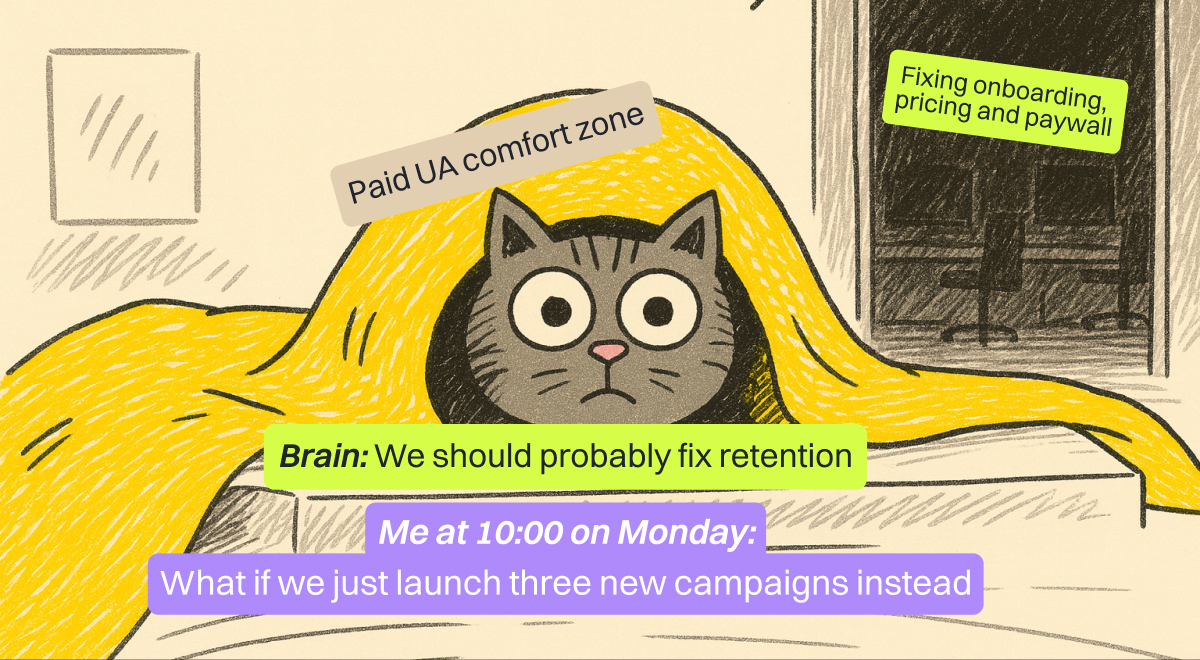
First: teams often rely almost entirely on paid UA. They might have two or three strong specialists running channels, and the app might already be earning serious money, but the whole strategy is “spend, spend, spend.” The moment they pause budgets, nothing happens. There’s no organic engine. No retention ownership. No one looking at value delivery or lifecycle. Paid UA is overstaffed while everything else is underdeveloped.
And when CPIs increase and competition gets tougher, they suddenly realize: “Maybe we should do something beyond paid UA… maybe organic?”
This is extremely common, even in big apps.
Second: product and marketing work in silos. Different KPIs, different stories, no shared insights, no shared rituals. They rarely sync. And when they don’t sync, they don’t see that they’re working on the same user journey from two different sides. It breaks the whole growth loop.
Campaignswell: From your experience, what kind of mindset makes founders blind to growth blockers inside their teams?
Kevser: Honestly, it’s the mindset of “everything is fine as long as numbers grow.” If founders truly saw the structural problem, they would change it. But most of them move between product and marketing calls as if they’re separate universes. In the product meeting they talk UI and features, in the marketing meeting they talk CPIs and channels, and it feels normal. But this mindset hides a huge issue: they don’t see that these “different” problems are actually one problem.
The mindset that makes growth click
Campaignswell: What mindset shift helps founders finally see that full picture?
Kevser: Seeing the user journey as one continuous line. I always explain it as a one-line road. Once founders adopt this view, everything clicks — suddenly UI decisions, ad messaging, onboarding speed, pricing, product value, retention… all become part of one story rather than disconnected tasks.
And this “one line” is very concrete.
It starts with the ad.
What do you say to catch attention?
What value do you promise? What emotion do you want to trigger?
Then the user reaches your store page.
Do the screenshots continue the same promise you made in the ad?
Does the story stay consistent?
Next comes onboarding.
How fast do you show the value you promised?
Are you quick enough, or do you lose people before they experience anything meaningful?
Sometimes it’s a short questionnaire, sometimes a tiny playable piece of the core mechanic — anything that helps the user say, “Yes, this is what I came for.”
Right after that is the paywall.
And pricing isn’t universal. Users from social channels are used to lower prices. High-intent users from Apple Search Ads are willing to pay more. Your pricing should reflect the intent and the source. It should also adapt by country, because price sensitivity changes dramatically across markets.
Then the journey continues inside the product.
Which features do users rely on the most?
Where do they get the highest value?
And are these insights flowing back to marketing so they can bring the right users?
Because if product never shares that information, marketing will optimize for the wrong segments. And this is where a lot of teams lose money without even realizing it.
Campaignswell: And what happens when teams operate without that unified view? What breaks first?
Kevser: Clarity disappears. Focus disappears. Money disappears. Marketing starts bringing the wrong users. Product sees churn but doesn’t communicate it.
Teams don’t share insights, because they don’t realize they’re working on the same journey. That’s a mindset problem before it becomes an operational one.
And we see the same pattern over and over again.
For example: marketing brings users with a “running” interest because the CPIs are cheap. It looks great on the surface. But product sees that these users churn after three or four months. The LTV is weak. They don’t become loyal.
At the same time, “cycling” users cost more to acquire. The CPIs look worse and, of course, marketing avoids them.
But product data shows something completely different: cycling users stay for a year or more, and they drive the strongest LTV in the entire app. They’re the true high-value audience.
If product never tells marketing this, the company keeps optimizing for cheap installs instead of valuable users. They invest energy in the wrong places without ever realizing it, simply because the two teams never see the journey as one line.

Why some teams scale and others spin
Campaignswell: When teams get lost in cheap installs and scattered decisions, it’s clear ambition alone doesn’t fix anything. So what actually matters? Do founders really need a 10x ambition right now?
Kevser: I wouldn’t say they need 10x ambition. What they really need is 10x clarity. If I had to put growth into a simple formula, it would be: 10x clarity + 10% iteration.
What do I mean by that? Imagine you run ten experiments in a single week. You can absolutely do that. Nine of them will fail. One of them will work. And that’s fine. When you keep the cycle running with clear hypotheses, clear goals, and quick iterations rather than one dramatic bet, compounding growth starts to build naturally.
Clarity here is about knowing what you’re trying to achieve, what you’re measuring, and how each experiment connects back to your actual goals. When that clarity is in place, even the “failed” experiments are useful, because they sharpen your understanding and inform the next iteration.
Ambition on its own doesn’t do that. Ambition without clarity, without a system, without structure… it’s just theater. You feel busy, you feel “10x”, but you’re not really moving in a compounding way.
Campaignswell: From the dozens of apps you’ve worked with, what patterns consistently separate the ones that break through from the ones that plateau?
Kevser: What I see again and again is this: the teams that grow treat product and marketing as one loop. They share the same understanding of what value means for the user, the same interpretation of data, the same definition of “good.” Marketing brings real behavioral insights back into product. Product gives marketing new angles, new stories, new value points based on what users actually do inside the app. It becomes one continuous cycle where each side sharpens the other.
Teams that plateau work in silos. Product ships features that marketing can’t position. Marketing keeps promising things that no longer match the real product experience. They sit in separate meetings, talk about separate KPIs, and operate as if they’re solving unrelated problems. They’re all busy, but they’re not building the same growth engine.
That’s the pattern that shows up in almost every app I’ve touched. The moment product and marketing stop feeding each other, growth stalls. The moment they operate as one system, growth compounds.
Campaignswell: What’s the most dangerous misconception about subscriptions that blocks apps from scaling big?
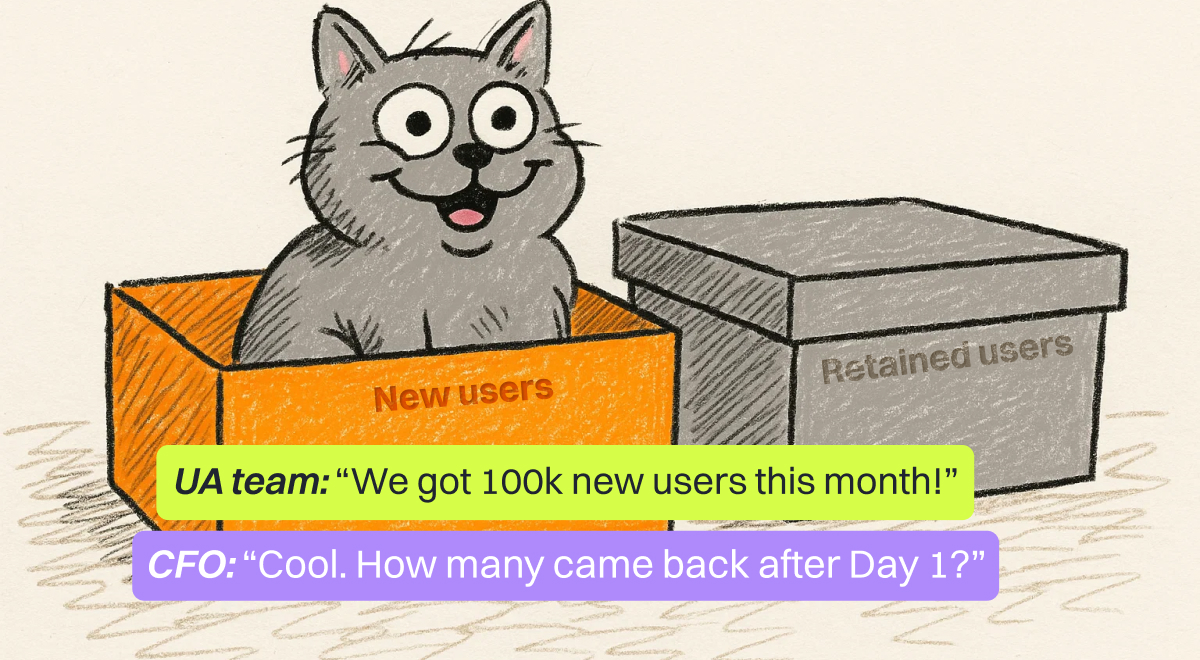
Kevser: One of the biggest misconceptions I see is this obsession with the top of the funnel. Founders think that if they just bring in more traffic, everything will fix itself. “We need more channels. We need more downloads. We need cheaper CPIs. We need more, more, more.”
But they barely look at retention. They barely look at what actually happens in the first session. They barely check whether their value proposition reaches the user clearly on day one, day seven, day thirty.
All the energy goes into acquiring users, and almost none goes into keeping them.
And when I ask “Why?”, the pattern is always the same. Taking action at the top of the funnel is easy. Any indie dev can open an Apple Search Ads account, start spending, and see installs flowing in. It feels productive immediately.
Working on retention takes real effort. It requires engineering time to change the product. It requires proper design resources. And most small teams lack both. Even tiny improvements, like showing a playable moment before the paywall, need engineering work, and many teams simply don’t have that capacity.
So they stay in the comfort zone of buying traffic, hoping volume will carry them. But subscriptions don’t scale on volume. They scale on value, clarity, and retention.

Five questions that expose your system
Campaignswell: In your LinkedIn post you wrote that you can sketch a growth plan after just five questions. Why exactly these five? What’s the logic behind them?
Kevser: These five questions force you to think about unit economics and your real growth levers. They’re simple on the surface, but they uncover the whole system.
The first two — What do you do? and Who is it for? — anchor your audience and your positioning. Most teams skip this. They want to run campaigns without clearly defining who they’re speaking to and what problem they’re solving. But if this part is vague, everything else becomes noise.
The next two — When do you monetize? and Why do they return? — reveal your paywall timing and your retention loop. These questions let me see how you plan to deliver value before asking for money, and what keeps users coming back after day one, seven, or thirty. With this clarity, you can actually design monetization instead of hoping for it.
And the last one — What can you spend? — grounds the whole plan in reality. Every channel has different dynamics. Apple Search Ads is easy to start. TikTok needs design, production, aggressive budget. If you’re a small bootstrap team, TikTok Paid won’t be your starting point no matter how much you like the channel. This question shows your true ceiling and how far you can push.
When a team answers these five questions honestly, I can already see the structure of their growth plan. Everything else is refinement.
Campaignswell: There’s this classic debate in the app world: should you build a great product first or great marketing first? How do you see the balance between the two?
Kevser: I don’t think one should come before the other. In the ideal world, product and marketing move together, in sync, towards the same goal.
But the real world looks different.
When teams lead with marketing before they have product clarity, they scale confusion. They run the same targeting, same creative quality, same budgets on different features, and suddenly one works, one doesn’t, and they have no idea why. They think it’s a channel issue, but actually they were promoting features the product wasn’t ready to support or didn’t deliver clearly.
And the opposite happens too. When teams lead with product and ignore positioning, they ship ghosts no one finds. They sit in their own bubble, get excited about a new third feature, and immediately want to talk about it in ads. They push it hard, and then they’re shocked when results don’t come. Because they’re not listening to marketing, not listening to what the audience tells them through behavior.
One of my favorite examples is SimplyWise. It’s a simple receipt-scanner app, and the team was convinced their next breakthrough would come from the expense dashboard. Mileage tracking was just a third feature, not a priority at all.
When we launched Apple Search Ads and ran everything through my three-dimensional framework, the data showed a completely different picture. We could suddenly see which segments were more expensive, which features actually drove subscriptions, and where retention was coming from, and it wasn’t the expense dashboard. It was the mileage tracker.
After seeing the insights, they shifted their whole focus: the dashboard was left at the bare minimum, development moved to the mileage tracker, and eventually they even launched a separate app just for Mileage because demand around that feature was so strong.
Winning moves for Q4 and Q5
Campaignswell: Q4 and Q5 are coming. If a team cares about long-term growth, not just a strong December, how should they approach this season?
Kevser: Q4 always looks exciting from the outside: lots of “high-intent” buyers, traffic going up, everyone assumes it’s the best season to scale. But in reality, Q4 is the season where everything breaks first.
Because every major channel’s algorithm goes crazy. All it takes is one giant player to distort the entire system. Last year it was Temu, and the wild part is, they weren’t even spending for their app. They were dumping insane amounts of money into web campaigns on Meta. But that alone was enough to completely shake Meta’s ad auction.
As a result, even small advertisers in totally different categories suddenly couldn’t get stable performance or normal CPIs anymore. That’s why I personally don’t like Q4: competition skyrockets, auctions go wild, and CPIs climb to irrational levels. And if your retention is weak, you’ll just end up buying users who churn instantly, an expensive mistake.
So what should teams do? Simplify your structure. Double down on what already works. Scale only the channels and campaign types you fully trust.
Q4 is not the moment for big reinventions. It’s not the moment to test a brand-new channel, a new creative strategy, or a new monetization idea. Q4 is survival mode: protect your cash payback. The right time to explore and experiment is Q5. In January you focus again on retention, pricing structure, and rebuilding your system in a calm environment.
That’s the balance: protect the economics in Q4, strengthen the foundation in Q5.
The metrics that tell the truth
Campaignswell: Let’s talk about metrics. What metrics do you usually look at when you want to understand how healthy the system is?
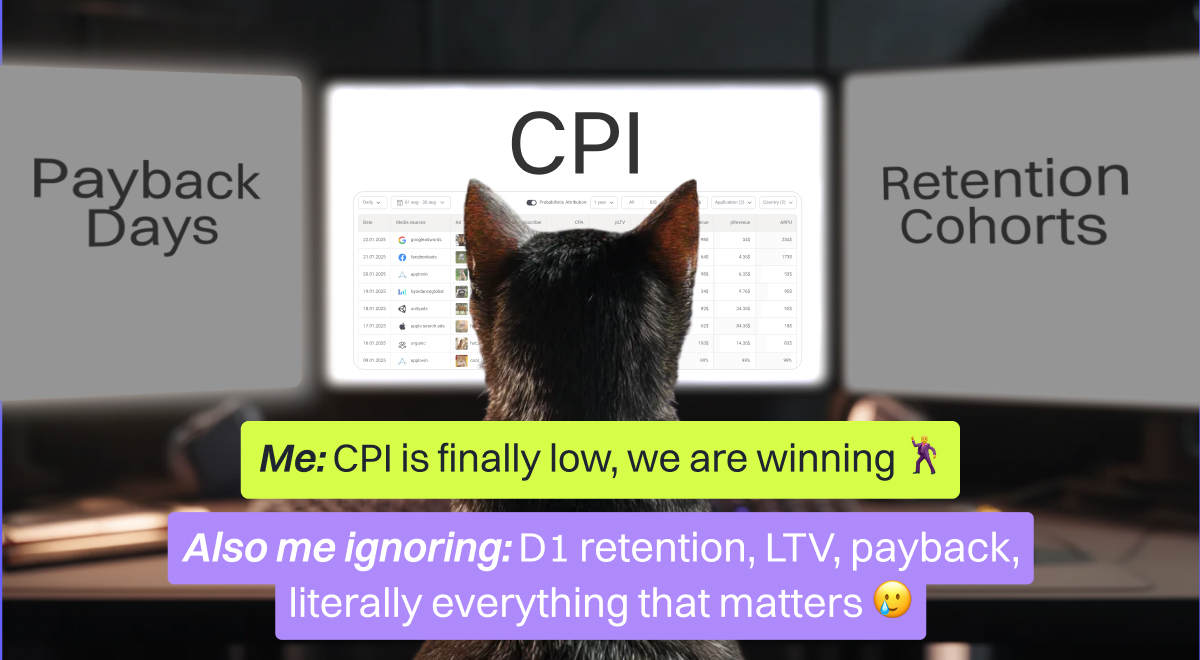
Kevser: When I want to understand how healthy an app’s system really is, I always start with the same thing: cohorts. <highlight-pink>Cohort, cohort, cohort. <highlight-pink> Everything else sits on top of that.
And inside those cohorts, there are a few non-negotiable signals:
- Day 1 and Day 7 activation
- Paywall view rate
- Trial start rate
- Trial-to-paid conversion
- 30-day churn
- Cash payback
- LTV
These tell you almost everything about the true state of your growth machine.
Why exactly these? Because cohorts let you see the big picture. They force you to look at users not as abstract “traffic,” but as groups whose behavior changes depending on where they came from, what they saw, and what you showed them. If you break cohorts down by channel, suddenly you see whether a channel is actually working — that’s your macro view. And if something looks off, you zoom in: which source? which campaign? which creative? That’s your micro view.
But if I had to pick just one metric, one North Star? Day 1 retention. If I see a big drop on Day 1, I would change almost everything in the app. Because if users don’t even make it past the first session, nothing else matters.
And if we’re talking subscription apps specifically, then the most critical number is Install-to-paid rate. Trial-to-pay is right behind it. These two tell me more about the health of current marketing efforts than anything else.
The reason is simple: campaign-side metrics are easy to fix. You chose the wrong emotion, the UGC creator was annoying, the hook didn’t land — those things can be fixed in a day. But if your onboarding is leaking 60% of users before they even start a trial, no amount of great campaigns can save you. That’s where the real damage happens.
The right (and wrong) jobs for AI in your project
Campaignswell: Everyone talks about AI transforming growth. What’s your take? How can AI actually help teams move faster and grow smarter?
Kevser: AI can be incredibly helpful, just not everywhere. In the areas where it does work well, it saves a huge amount of time.
For example, creative generation works great when you don’t start from zero. If the brief is clear, AI can turn it into solid variations fast. The same goes for reviews — clustering them, analyzing them, pulling insights. We even built a review agent for that and shared it on LinkedIn because it was so effective.
Anything that relies on pattern recognition is also a perfect match for AI. You can set anomaly alerts for paid campaigns or for your internal dashboards, and it catches the weird stuff immediately. It’s also very handy when you’re analyzing experiments and need quick structure.
When your product definition is clear, AI becomes useful on the strategic-creative side too. It helps articulate the product, the problem it solves, map the user emotions around it, and turn that into creative angles. With a good prompt, it connects value and emotion surprisingly well.
But there are still areas where AI simply can’t step in. It’s not good at creating experiment hypotheses, and it’s definitely not good at judging results or deciding what “success” actually is. Those are decisions that still need a human who understands the product and the system.
The setup behind teams that grow (people + marketing)
Campaignswell: When you think about sustainable growth, what does the ideal setup look like across stages — the team, the roles, the marketing engine? How should it evolve from early stage to traction to scale?
Kevser: Before product–market fit, the setup needs to stay small but sharp. You absolutely need a product manager — someone who can own the product direction day to day. Alongside that, you need a marketer who works like a Swiss-knife: a T-shaped person who can run a few channels on their own and keep the whole system moving. Add a designer, and ideally a data generalist who can support you with basic tracking and analysis. That’s enough to learn fast and not drown in complexity.
Once the product starts to find traction and the business begins earning money, the team needs more ownership around channels. That’s the moment to bring in dedicated paid user acquisition specialists and one person who fully owns lifecycle.
When you move into true scaling, the structure has to expand. You add a dedicated creative engine, channel specialists, data engineers, and even a pricing product manager. At this stage, small inefficiencies become expensive, so every function needs someone who can go deep.
The same logic applies to tools. Early stage is simple: an MMP, a basic BI dashboard (anything you like), a basic creative library, and a clean testing log. Honestly, that’s enough in the beginning; the goal is fast learning, not heavy infrastructure.
But as soon as you enter the scaling stage, the toolset gets bigger. You need multiple measurement methods, proper product analytics tools, paywall tools, a clear events taxonomy, and a data warehouse. A solid experimentation framework becomes essential. A creative-assets database helps a lot, and large apps often use dedicated platforms just for that. And on top of everything, you need a system for alerts, because with scale, issues appear faster than people can spot them manually.
Growth green flags vs. red flags
Campaignswell: When you meet a new team, what signals tell you they actually have the mindset and the execution power to scale, and what red flags show they’ll stall unless something changes?
Kevser: I love working with teams that have a real appetite for testing and learning. You feel it immediately. They’re curious, they explore, they push toward their goal by trying things instead of debating them endlessly. If a team consistently tests, learns, and pushes forward, that usually tells me they have the capacity to scale.
And then there’s the other side.
A big red flag is when a team is under pressure and keeps saying they “need more,” but they can’t answer the basics: Who is our ICP? What is our value? What’s our budget ceiling? When those foundations are unclear, it doesn’t matter how much they spend because everything becomes noise.
You also see teams obsessed with vanity dashboards and vanity metrics. They fear touching pricing. No one owns activation. Everyone is scattered, each person chasing a tiny metric in isolation. No testing framework, no creative framework, no structure at all. When I see that, I know they’ll stall unless something changes fast.
Campaignswell: Have you noticed any correlation between a founder’s background and how successful their app becomes?
Kevser: I’ve worked with founders from many different backgrounds, and a few clear patterns keep showing up.
Technical founders tend to succeed when they give proper attention to narrative and UX. Once they look beyond features and think about how the product actually feels, their results change dramatically.
Brand-first founders do well when they take cohorts and metrics seriously. As soon as they step out of intuition and start reading the data, they grow much faster.
The founders who truly win are the ones who change their mind quickly when new evidence appears. That flexibility is the common trait among the strongest performers.
On the opposite side, almost every failed app I’ve seen had founders with very fixed opinions who weren’t open to suggestions. And this pattern shows up not only in subscription apps but everywhere.
A quick side note from Campaignswell
Cohorts, cohorts, cohorts. Yeah! If that’s your love language, we’re already friends.
SaaS BI Campaignswell is your <highlight-pink>ideal partner if you want to actually know your cohorts<highlight-pink> (not admire them on dashboards.) We help performance marketers ignore the segments that burn budget without giving anything back, and double down on the ones that truly generate revenue and momentum.
What you get with us:
• clear cohort analytics
• signals that reveal where your real growth comes from
• predictions that highlight what’s worth scaling next
• and, most importantly, clarity on which users deserve your energy and which ones don’t
If you want to see which cohorts are quietly carrying your app,
book a demo and let’s uncover your money-making segments together.

Co-founder & CEO at Campaignswell
Book a demo


Co-founder at Campaignswell
Use the session to ask your hardest questions about scaling, LTV, or attribution, and see how full-funnel predictive analytics gives you clear, actionable answers.
10x Growth Mindset from a BetterMe and Replika growth leader: The uncomfortable truths behind scaling subscription apps
10× Growth Mindset: The real reason teams stop at $10K–$100K in spend

10x Growth Mindset from a Meta insider: What matters more than algorithm tactics for subscription apps on Meta

10× Growth Mindset: How app founders engineer a system for repeatable wins and forecastable outcomes
The 10× Growth Mindset: field notes from growth expert who scaled 100+ apps