How Subscription Apps move from PMF to 30x growth in one year


Hey, Artsiom here, CEO at Campaignswell, a SaaS BI for performance marketing.
Most subscription startups begin paid acquisition the same way: small budgets, fast tests, decisions driven by CPA and ad dashboards. At smaller budgets, this approach remains workable, but as spend grows, the limitations of the stack start surfacing one by one and cost you tens or hundreds of thousands of dollars.
As budgets grow, visibility breaks. Without a clear view of what actually pays back, scaling decisions go blind and budgets follow.
✔ Ad platform dashboards keep reporting what happens inside each channel, but they stop answering the question that actually matters: how today’s spend turns into real subscription revenue over time. Channels start influencing each other, payback stretches out, and short-term CPA stops reflecting long-term outcomes.
✔ At the same time, MMP attribution begins to drift. Renewals, refunds, long subscription cycles, and cross-platform flows add noise. What used to be small attribution gaps turn into material differences that affect scaling decisions.
✔ Manual revenue tracking becomes slower and heavier. Numbers come from multiple systems, arrive with delays, and require constant reconciliation. By the time the picture looks complete, the money is already spent.
✔ LTV estimates calculated in Google Sheets quickly become unreliable as spend grows. Small errors in churn, renewal timing, or cohort behavior compound fast, and forecasts drift away from reality, often in ways that directly impact scaling decisions and revenue.
✔ Once teams start launching web funnels, the complexity increases further. Web-to-app flows, delayed conversions, split payment systems, and overlapping attribution make it harder to connect spend to outcomes. Without a unified view, each new funnel adds more data and less clarity.
The AIstats team, a sports analytics subscription app we work with, saw these risks early and made a deliberate decision to avoid them.
AIstats entered paid acquisition at an early stage, <highlight-green>with spend around $5K per month and a clear plan to scale beyond it.<highlight-green> There was very little historical data.
But the goal was to build a scalable acquisition engine and grow it without unpleasant surprises down the line.
Instead of optimizing around proxy metrics and fixing analytics later, AIstats connected Campaignswell from the very beginning. This gave them a clear picture of <highlight-green>how users behaved after install, how cohorts formed over time, and how spend translated into real subscription revenue, even at low traffic volumes.<highlight-green>
A key point here is that they didn’t need to wait months for data. The system relied on user behavior rather than historical averages, which meant early revenue and LTV signals appeared quickly, early enough to support confident decisions.
Results: scaling spend without losing ROI
Once Campaignswell became part of the workflow, the way AIstats scaled changed fundamentally.
Paid spend grew from $5K to $15K per month within the first few months, then <highlight-green>scaled steadily to nearly $150K per month over the following year, with a 30% ROI benchmark<highlight-green> serving as the reference point for growth.
In practice, many teams reach this level of spend two to five times slower, held back by experimentation cycles, spreadsheet-driven analysis, and forecasting guesswork, rather than scaling confidently after finding product–market fit.
With a solid foundation in place, AIstats was able to expand confidently into new channels.
Alongside their existing Web2App flow, the team launched a Web2Web funnel, fully supported from day one with attribution, LTV modeling, and revenue visibility. The results were clear almost immediately: LTV in the new Web2Web funnel outperformed previous cohorts by 20–25%, and the data confirmed it early enough to scale without hesitation.
“Before, everything was Web2App. When we launched Web2Web, we needed full analytics support from day one — attribution, LTV modeling, all of it. Campaignswell gave us that.”
[[ctaform1]]
So, what is Campaignswell anyway?
Campaignswell is a SaaS BI layer built for growth teams who actually run campaigns.
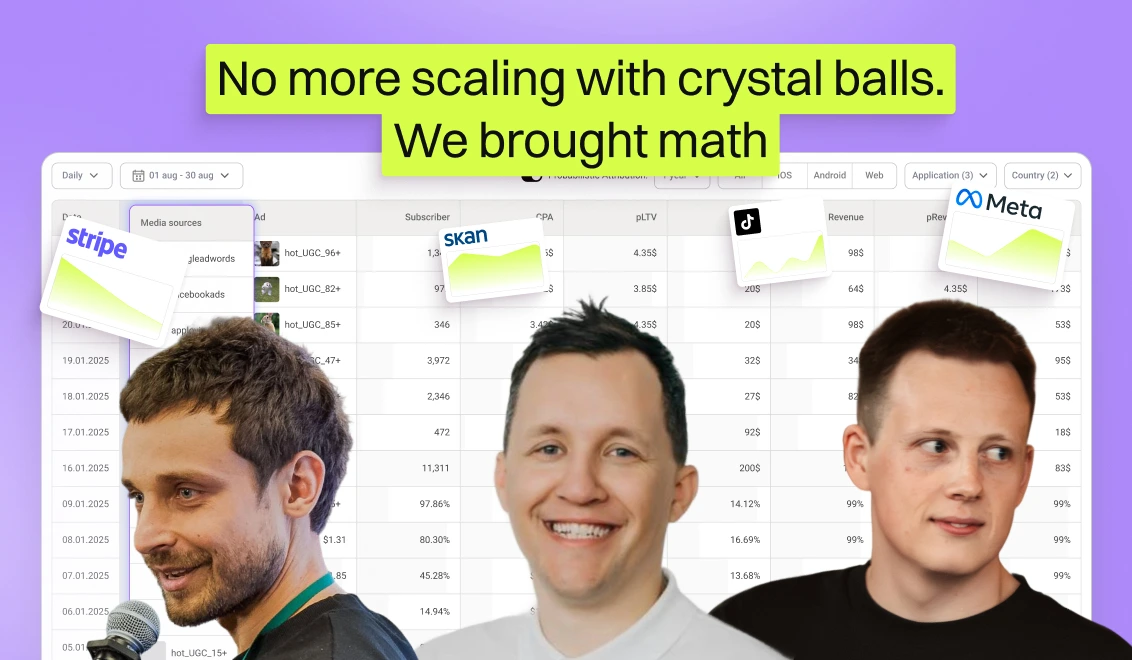
Think of it as a <highlight-green>predictive control center for performance marketing: live dashboards, early revenue and LTV signals, cohort health, and payback — all in one place, ready to use from day one.<highlight-green>
It connects your marketing stack — Meta, TikTok, Apple, Google, Stripe, SKAN, and more — and gives you a single, consistent view across mobile and web.
Under the hood, it uses behavioral modeling to understand how users actually behave and to surface early revenue and ROI signals, even when historical data is limited.
UA and CMO teams get immediate access to highly granular cohort performance, creative-level revenue and LTV, payback timelines, funnel retention, and ROI without custom builds or SQL.
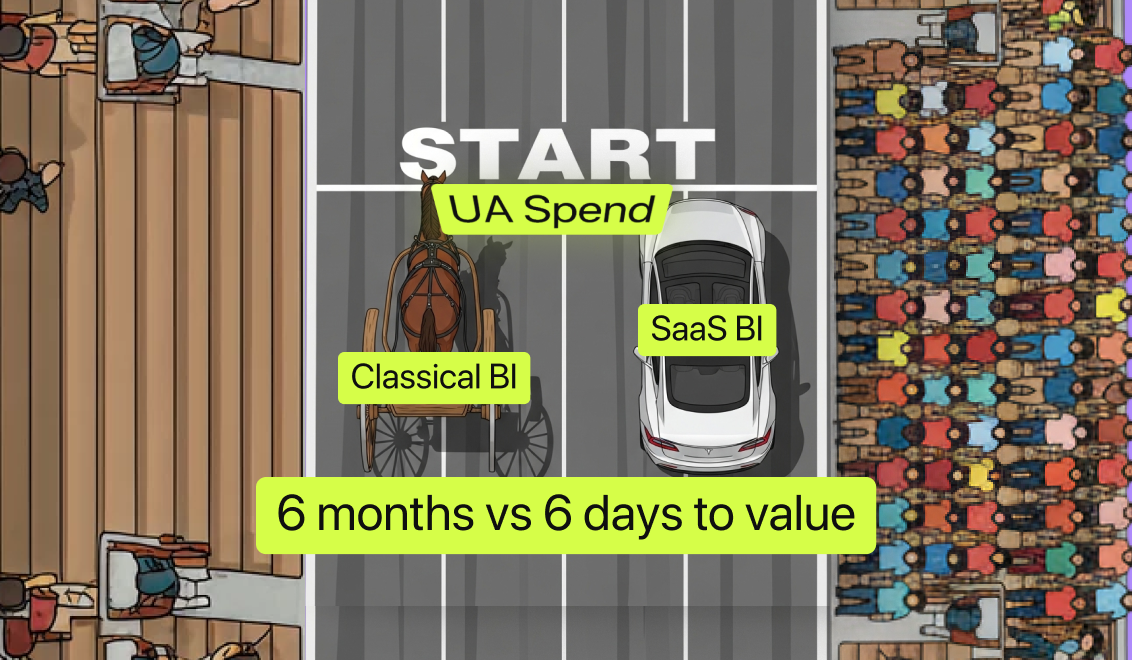
<highlight-green>Compared to traditional BI, it’s faster to set up, easier to operate, and significantly more cost-effective.<highlight-green> And because it’s built specifically for UA and performance marketing, it speaks the same language your team does — pRevenue, payback, pROAS, ROI.
Campaignswell helps you see what’s working, why it’s working, and where to push next — early enough to matter.
If this sounds like where you are now, I’m happy to walk you through how this looks on real data. Feel free to book a demo here.
See your revenue and ROI before you scale

Co-founder & CEO at Campaignswell
Book a demo


Co-founder at Campaignswell
Use the session to ask your hardest questions about scaling, LTV, or attribution, and see how full-funnel predictive analytics gives you clear, actionable answers.
Why your Subscription App can’t break the $100K/Month ceiling without losing revenue



71 takeaways mobile app publishers can use to improve monetization strategy and LTV
10 monetization mistakes that hold back subscription apps